


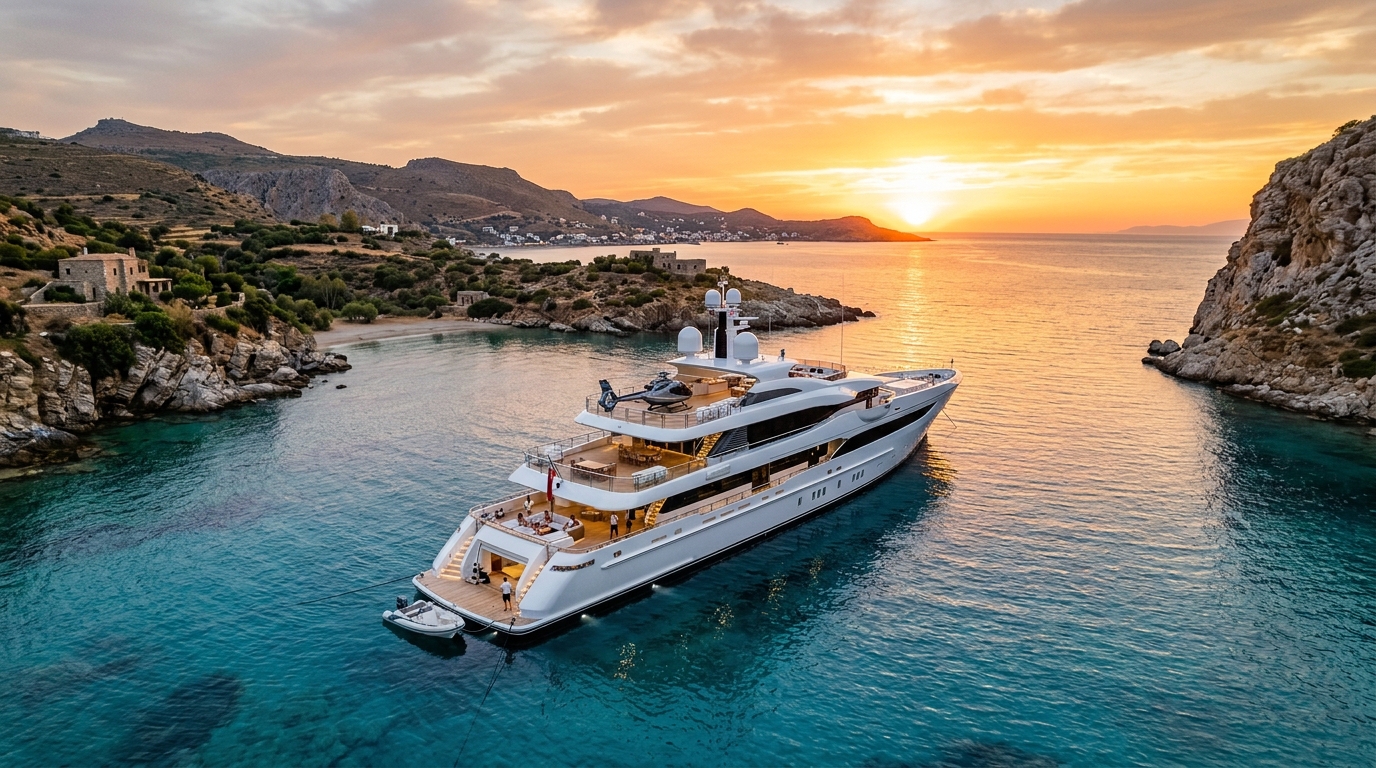
The story of how yacht designers create custom yachts is really the story of turning identity into structure. A custom yacht begins with human desire: privacy, status, comfort, travel, beauty, and control. Then the design team shapes that desire into a practical plan.
The process moves through discovery, concept, engineering, construction, and launch. Each stage matters. Each decision affects the next. When the team works well, the final yacht feels balanced, elegant, and deeply personal.
Custom yacht design succeeds when it respects both emotion and engineering. That is the true value of a bespoke yacht. It is not only built to perform. It is built to feel right.
How yacht designers create custom yachts is a question driven by more than curiosity. It reflects a deeper desire for freedom, prestige, privacy, and a floating space that feels personal in every detail. A custom yacht is not just a vessel. It is a lifestyle statement, a private retreat, and a carefully engineered expression of taste.
People who explore the idea of a bespoke yacht usually want something mass-produced boats can never provide. They want spaces shaped around family routines, entertaining habits, offshore adventures, and long-term comfort. They want design choices that feel intentional. They want a yacht that fits the owner, not the other way around. That is why the process behind how yacht designers create custom yachts is both emotional and technical.
In this guide, you will see how the journey moves from a rough idea to a floating reality. You will learn what is custom yacht design, why the process matters, and how designers, naval architects, engineers, and shipyards work together to transform a vision into a launch-ready masterpiece.
What is custom yacht design?
What is custom yacht design? It is the process of creating a yacht around the exact needs, taste, and lifestyle of one owner or one ownership group. Instead of choosing from a fixed catalog, the client shapes the vessel from the beginning. That means the layout, materials, proportions, finish, performance goals, and onboard experience are all tailored.
This is where the emotional value becomes powerful. A custom yacht can support quiet family weekends, high-profile social events, long-distance cruising, or expedition travel. The design is built around how the owner wants to live at sea. That sense of personal control is a major reason bespoke yachts remain so desirable.
Custom yacht design also allows for distinction. Many owners are not simply buying luxury; they are buying identity. The yacht becomes a private signature in a crowded world of similar vessels. That is why how yacht designers create custom yachts matters so much. The process is never only about style. It is about translating lifestyle into structure.
Why owners choose a custom approach
A custom yacht offers advantages that standard builds cannot fully match. The first is usability. A yacht designed around specific routines feels easier to live on because every space has a purpose. The second is comfort. Owners can prioritize larger suites, better crew flow, quieter systems, or more open social spaces.
A custom build also supports long-term value differently. Even when a yacht is highly personalized, thoughtful design can make it more desirable because the quality of the experience becomes memorable. The vessel stands out not only because it looks expensive, but because it feels coherent.
There is also a psychological layer. People who commission a custom yacht often want a sense of authorship. They are not simply selecting options. They are participating in creation. That makes the journey itself part of the luxury.
How yacht designers create custom yachts
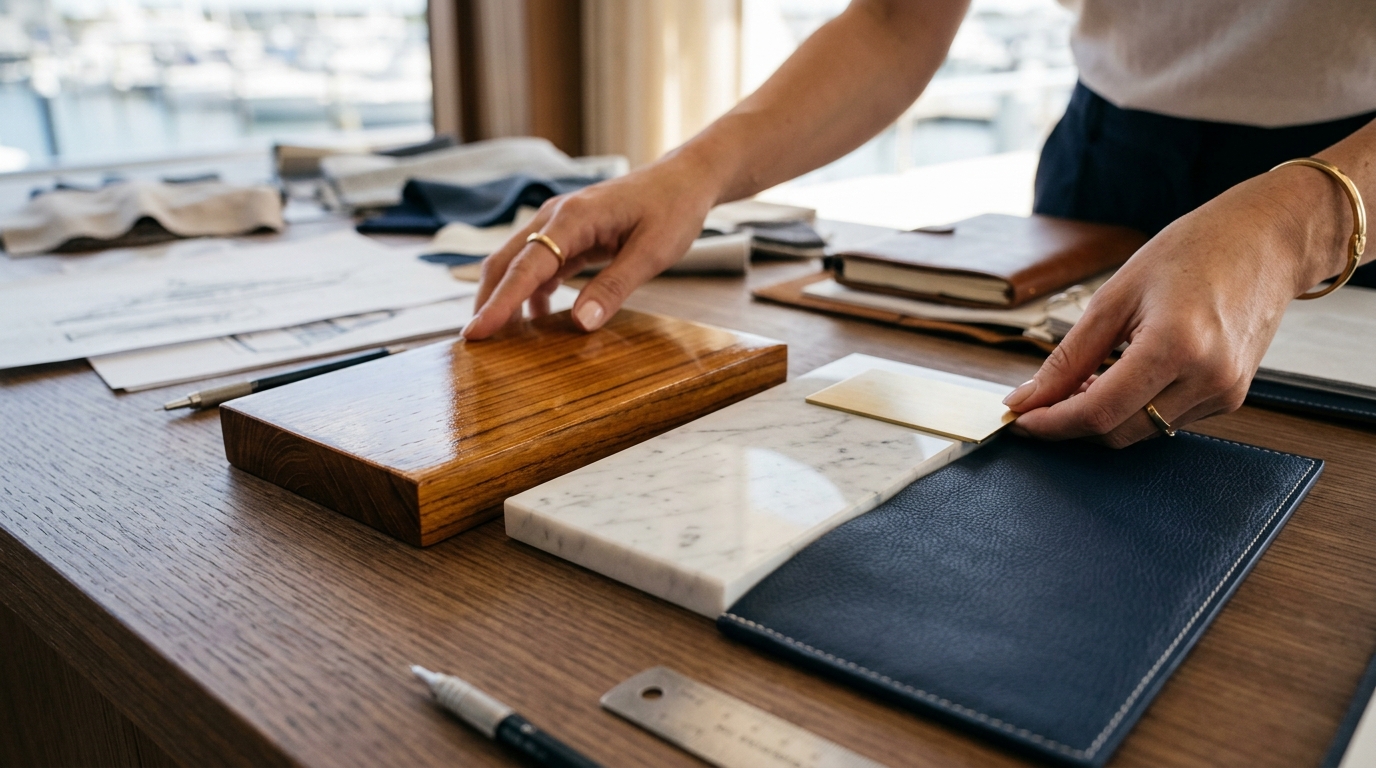
How yacht designers create custom yachts starts with conversation, not sketches. Designers first study the owner’s lifestyle, family needs, travel style, privacy preferences, and onboard priorities. They also consider where the yacht will cruise, how many guests it will carry, and whether the owner values speed, range, wellness, entertainment, or expedition capability.
From there, the team builds a concept that balances beauty and function. The exterior silhouette must be elegant, but it also has to respect engineering realities. The interiors must feel rich, but they also need to move efficiently, handle marine conditions, and support maintenance. This balance is the heart of the profession.
Once the creative vision is established, the project moves into technical refinement. The yacht’s dimensions, hull form, propulsion choices, stability, weight distribution, and structural logic begin to shape the final result. At every stage, design decisions influence performance and cost.
1. Discovery and lifestyle mapping
The first phase is discovery. Designers ask how the owner spends time, what kind of guests will be aboard, how often the yacht will sail, and what emotional atmosphere the owner wants. Some want serene and minimal. Others want bold, dramatic, and social. These answers influence everything.
2. Concept sketches and mood boards
The second phase brings ideas into visual form. This is where mood boards, hand sketches, reference images, and digital renderings help test direction. At this stage, the project begins to feel real, but flexibility is still high.
3. Yacht architecture planning
Yacht architecture planning connects beauty with practical use. Designers map deck levels, circulation routes, service zones, guest areas, and crew access. The goal is to create elegant flow without wasting space.
4. Naval architecture and engineering
At this point, the team must solve technical questions. This is how naval architects design yachts in a way that supports safety, balance, and performance. Hull shape, displacement, stability, and mechanical systems all come under review.
5. Interior space planning
Interior volumes are arranged to support privacy, comfort, and daily life. Public spaces, guest cabins, owner suites, wellness areas, and technical zones are positioned with great care.
6. Exterior styling and detailing
This is where visual identity becomes unmistakable. Yacht exterior styling shapes the yacht’s character from every angle. Window lines, deck overhangs, profile balance, and material transitions all influence the final impression.
7. Build, verification, and launch
Once design is approved, the shipyard transforms drawings into structure. Systems are installed, finishes are refined, and the yacht is tested before launch. The process continues until the vessel performs as beautifully as it looks.
Steps in the yacht design process
The steps in the yacht design process usually follow a sequence that blends imagination, analysis, and production. While each project is unique, most custom builds move through a recognizable framework.
| Stage | Main Goal | What Happens |
|---|---|---|
| Briefing | Understand the owner’s vision | Lifestyle interviews, goals, preferences, budget discussion |
| Concept | Shape the creative direction | Sketches, mood boards, profile ideas, early layout concepts |
| Feasibility | Test the idea technically | Size limits, stability, weight, performance, and cost review |
| Design Development | Refine the design | Exterior details, interior layouts, systems planning |
| Engineering | Prepare for build | Structural drawings, naval calculations, technical coordination |
| Construction | Turn plans into reality | Hull build, systems installation, interior completion |
| Sea Trials | Confirm performance | Speed, handling, noise, systems, safety, and comfort testing |
| Delivery | Hand over the yacht | Final inspection, owner walk-through, launch preparation |
This process may look linear, but in reality it loops. Designers often revisit earlier decisions after technical review, because the best yachts emerge from collaboration rather than rigid planning.
How to design a luxury yacht
How to design a luxury yacht begins with defining luxury correctly. For some owners, luxury means size and visual drama. For others, it means silence, privacy, and effortless movement through space. The smartest designers understand that luxury is not always about adding more. Often it is about refining what matters most.
A luxury yacht design should begin with the owner’s emotional priorities. Do they want a family sanctuary, a party platform, a long-range cruiser, or a wellness-focused retreat? Once the purpose is clear, the design can support it with the right layout, textures, lighting, and technology.
Material selection matters too. High-end finishes should feel authentic rather than overwhelming. Natural stone, fine woods, custom metalwork, and soft textiles can create warmth, but only when used with restraint. Lighting is equally important because it changes the mood from day to night and makes interior volumes feel larger.
A great luxury yacht also respects operational ease. Beautiful spaces lose their value if crew circulation is awkward or maintenance becomes difficult. The most successful yachts combine elegance with quiet practicality.
Custom yacht design from concept to launch
Custom yacht design from concept to launch is a long process because perfection at sea demands patience. The concept phase establishes the emotional identity of the yacht. The technical phase protects the yacht from compromise. The construction phase brings all disciplines together. Then the launch phase reveals whether the team succeeded.
The owner’s role during this journey is often more active than people expect. Decisions about layout, amenities, privacy zones, entertainment areas, and special features can define the whole experience. Some clients request beach clubs, helipads, spa rooms, movie theaters, gyms, wine cellars, or toy garages. Others want simpler, more serene spaces with an emphasis on light and proportion.
The best projects keep the original vision intact even while solving technical challenges. That continuity is what makes the final yacht feel like a natural extension of the owner rather than a collection of expensive parts.
Yacht interior design ideas
Yacht interior design ideas should always start with lifestyle, not decoration. A yacht interior has to feel comfortable at anchor, functional under way, and visually calm in motion. Because space is limited, every detail should earn its place.
One strong approach is to create a sense of openness through light colors, layered textures, and clean lines. Another is to use contrast carefully, combining dark accents with soft neutrals to give the interior depth. Many owners now prefer residential warmth over overly formal styling, because the goal is to make the yacht feel lived-in rather than staged.
Storage is another critical part of interior design. Hidden compartments, multi-use furniture, and well-placed cabinetry improve daily convenience without cluttering the experience. Lighting can also transform the atmosphere. Adjustable lighting zones allow the yacht to shift from bright daytime function to soft evening elegance.
For owners who enjoy entertaining, dining spaces and salons should support conversation and movement. For those who value privacy, the owner’s suite and guest cabins need acoustic comfort, visual separation, and a more intimate mood. Good interior design solves these emotional needs as much as the practical ones.
Key features of modern yacht design
Key features of modern yacht design often combine performance, sustainability, wellness, and flexibility. Today’s owners expect more from a yacht than luxury finishes alone. They want smarter systems, cleaner lines, and a more thoughtful relationship between form and function.
One major trend is open-plan living. Large windows, sliding doors, and connected indoor-outdoor spaces make the yacht feel larger and more natural to inhabit. Another feature is multifunctional space. A single area may shift from lounge to dining to cinema depending on the time of day.
Technology is also central. Advanced navigation systems, automation, onboard connectivity, and smart climate control now shape daily comfort. Owners want control, but they also want simplicity. The best systems fade into the background.
Wellness-focused features are increasingly common too. Gyms, spas, saunas, massage rooms, and quiet relaxation areas help the yacht function as a private retreat. In many projects, sustainability is becoming part of the luxury story through energy efficiency, hybrid propulsion, lighter materials, and better operational planning.
How naval architects design yachts
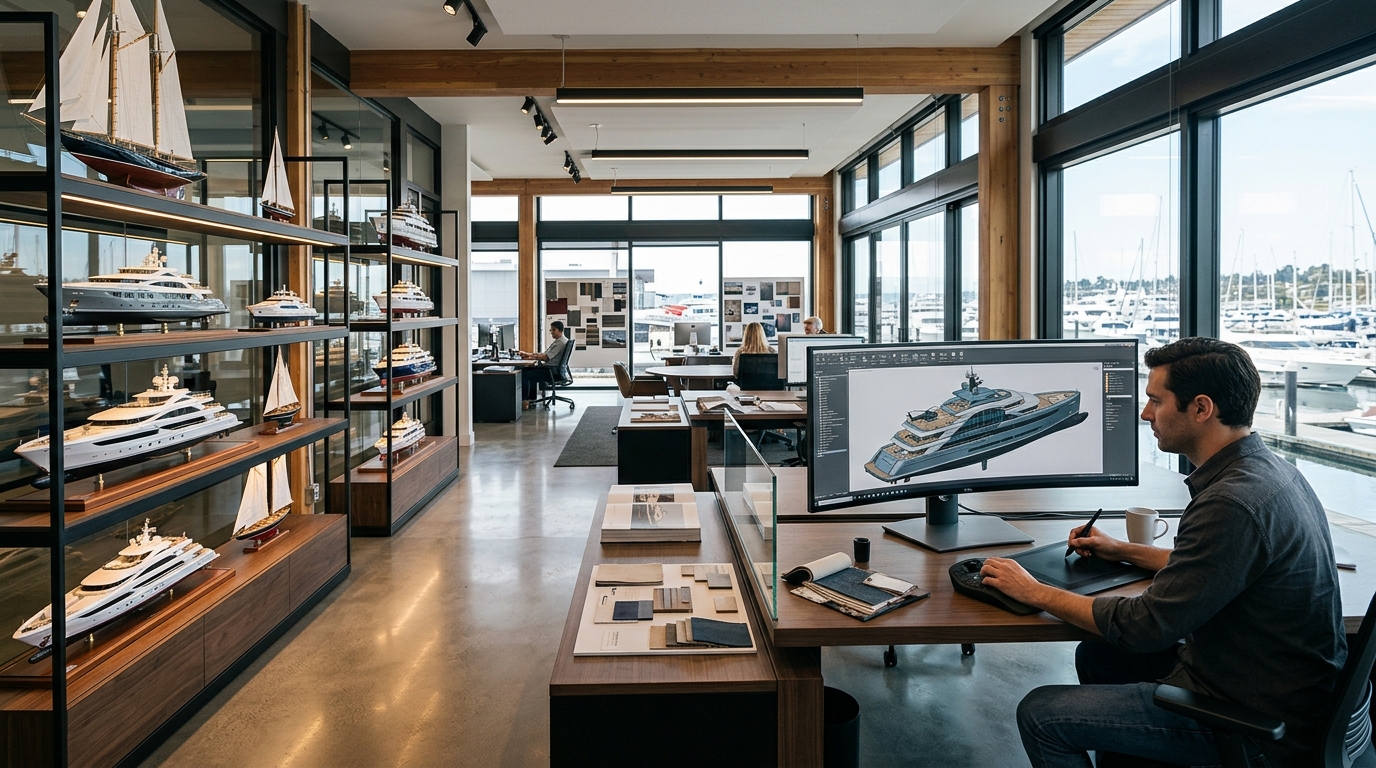
How naval architects design yachts is one of the most important technical questions in the entire process. Naval architects are responsible for making sure the yacht is safe, stable, efficient, and seaworthy. They work closely with designers, engineers, and shipyards to ensure the beautiful concept can survive real-world conditions.
Their work begins with the hull. The shape of the hull affects speed, fuel use, comfort, and handling. They also study weight distribution so the yacht remains balanced and performs predictably in changing seas. Stability calculations are essential because a yacht must feel secure not only when still, but also when turning, accelerating, and moving through rough water.
Propulsion systems, tank placement, structural loads, and mechanical routing are also part of the naval architect’s responsibility. Every hidden decision influences the experience on board. When done well, the yacht feels effortless. That sense of effortlessness is often the result of hundreds of technical judgments beneath the surface.
Factors influencing custom yacht construction
Factors influencing custom yacht construction include budget, size, materials, complexity, intended use, and delivery timeline. These elements may sound practical, but they deeply affect creative freedom.
Budget influences the extent of customization, the level of finish, and the range of onboard features. Size affects layout options and technical requirements. Materials change weight, durability, and maintenance demands. Complexity determines how much engineering and coordination the project needs.
The yacht’s purpose matters just as much. An exploration yacht must be robust and range-focused. A social entertainment yacht may emphasize deck space and guest flow. A family yacht may focus on safety, storage, and flexible sleeping arrangements. Each decision supports a different kind of ownership.
Regulatory compliance, classification standards, and yard capability also influence construction. Even the best design must be achievable within the chosen shipyard’s tools and expertise. That is why collaboration is so important from the start.
Latest trends in yacht design
Latest trends in yacht design show a clear shift toward personalization, wellness, technology, and sustainability. Owners want yachts that feel contemporary without becoming trendy in a shallow way. They want design choices that still feel relevant years later.
One strong trend is the blending of interior and exterior spaces. Instead of isolated rooms, yachts are increasingly organized around fluid transitions. Another trend is the use of softer, more organic forms. Owners often prefer calm, residential atmospheres over rigid, showy interiors.
Sustainable thinking is also shaping the market. Hybrid systems, energy-efficient layouts, lighter construction methods, and smarter operational planning are gaining importance. At the same time, technology continues to advance. Owners expect intuitive systems, stable connectivity, and control through integrated interfaces.
There is also growing interest in wellness and experiential luxury. Owners want spaces for rest, fitness, recovery, and sensory comfort. The yacht is no longer just a status object. It is a private environment designed to support a better quality of life.
Conclusion
A custom yacht is one of the most personal luxury purchases a person can make. It reflects how the owner wants to live, entertain, travel, and relax. That is why how yacht designers create custom yachts is such a fascinating process. It combines imagination, technical precision, craftsmanship, and psychology in a way few industries can match.
From the first sketch to the final sea trial, every choice shapes the owner’s experience. The best yacht is not simply the largest or the most expensive. It is the one that feels intentional in every line, every surface, and every movement. When design, architecture, engineering, and lifestyle all align, the result is more than a yacht. It is a custom world on water.
FAQ
1. What is custom yacht design in simple terms?
Custom yacht design means building a yacht around one owner’s exact needs, lifestyle, and taste instead of choosing a standard model.
2. How long does the custom yacht design process usually take?
The timeline depends on size and complexity, but custom projects often take many months or even several years from concept to delivery.
3. What makes a luxury yacht feel truly premium?
A luxury yacht feels premium when the layout, materials, lighting, privacy, and technology all work together to create effortless comfort.
4. Why is naval architecture so important in yacht building?
Naval architecture ensures the yacht is stable, safe, efficient, and seaworthy, which is essential for both performance and comfort.
5. What are the most important elements in yacht interior design?
The most important elements are space planning, storage, lighting, material choice, comfort, and how well the interior supports daily life at sea.
6. What are the biggest trends shaping modern yacht design?
Modern yacht design is moving toward open spaces, wellness features, smarter technology, sustainable systems, and more personalized layouts.
