



The world’s largest superyachts represent advanced engineering, luxury design, and extreme wealth. These floating palaces combine cutting-edge technology, custom interiors, and global travel capability, showcasing innovation in maritime architecture while evolving toward more sustainable and efficient future designs.
For decades, the oceans have served as the ultimate playground for boundary-pushing naval architecture. Private shipbuilding has evolved from creating simple luxury cruisers to engineering massive floating palaces. These vessels represent the pinnacle of bespoke design, combining cutting-edge maritime technology with unparalleled opulence.
Building a megayacht requires thousands of hours of labour, visionary designers, and specialized shipyards capable of handling colossal dimensions. Buyers commission these vessels to serve as private retreats, floating offices, and symbols of extraordinary maritime achievement. Every detail, from the hull’s hydrodynamic efficiency to the acoustic insulation of the master suite, undergoes rigorous testing and refinement.
Defining the Megayacht Category
The terminology used to describe large private vessels often overlaps. A “superyacht” generally refers to a luxury vessel over 78 feet (24 meters) long with a professional crew. When a vessel surpasses 260 feet (80 meters), industry professionals often categorize it as a “megayacht.” Those exceedingly rare ships extending beyond 328 feet (100 meters) occasionally earn the title of “gigayacht.”
Size is measured in two primary ways: overall length and gross tonnage. Length dictates the visual footprint and the size of the berth required at a marina. Gross tonnage measures the internal volume of the ship. A shorter, wider ship might actually have more usable interior space than a longer, narrower vessel. Both metrics matter when evaluating the true scale of these oceanic giants. Learn more about Yacht Market Trends.
The Reigning Champions of the Sea
A select few vessels dominate the global fleet. These ships constantly push the boundaries of what is possible on the water.
Azzam: The Length Record Holder
Measuring an astonishing 590 feet (180 meters), Azzam currently holds the record for the longest private motor yacht in the world. Built by the prestigious German shipyard Lürssen, Azzam took roughly four years to build—a remarkably short timeline for a ship of this scale. The exterior features a sleek, balanced profile designed by Nauta Yachts. Despite its immense size, Azzam is surprisingly fast, capable of reaching speeds over 30 knots thanks to a combination of gas turbines and diesel engines pushing out 94,000 horsepower.
Eclipse: The Billionaire’s Fortress
Before Azzam took the crown, Eclipse reigned supreme. At 533 feet (162.5 meters), this Blohm+Voss masterpiece is famous for its extensive security features and robust engineering. The vessel boasts two helipads, two swimming pools, and a mini-submarine. The interior design prioritizes privacy and security, featuring armor plating and bulletproof glass around the master suite. It remains one of the most recognizable and technologically advanced ships on the water.
Dilbar: The Volume King
While Azzam wins on length, Dilbar takes the prize for sheer interior volume. With a gross tonnage of 15,917, this 511-foot (156-meter) Lürssen build feels like a massive luxury resort. Dilbar features a 25-meter swimming pool, which is one of the largest ever installed on a private yacht. The ship requires a crew of nearly 100 people to operate and maintain its vast array of amenities, which include multiple entertainment zones, vast outdoor terraces, and two helipads.
Sailing Yacht A: The Sail-Assisted Giant
Motor yachts usually dominate the size charts, but Sailing Yacht A challenges the status quo. Measuring 469 feet (142.8 meters), it is a sail-assisted motor yacht built by Nobiskrug. Its most striking features are the three towering carbon-fiber masts, which are among the tallest and most highly loaded composite freestanding structures in the world. The futuristic, metallic exterior design makes it one of the most polarizing and fascinating vessels ever constructed.
The Engineering Behind the Giants
Creating a vessel over 400 feet long requires solving complex physics problems. Stability, fuel efficiency, and vibration reduction are paramount.
Advanced Propulsion Systems
Moving thousands of tons of steel and aluminum through the water requires immense power. Modern megayachts frequently utilize diesel-electric propulsion systems. These systems use diesel generators to produce electricity, which then powers electric motors connected to the propellers. This setup reduces noise and vibration, significantly improving guest comfort. Some newer vessels are also incorporating hybrid technology, utilizing large battery banks to operate silently in protected environmental zones.
Stabilization and Comfort
Seasickness is unacceptable on a luxury vessel. To combat the ocean’s movement, large yachts employ active stabilization systems. Gyroscopic stabilizers spin at high speeds to counteract the rolling motion of the waves. Additionally, fin stabilizers deploy from the hull under the water line, adjusting their angle automatically to keep the deck perfectly level. These systems work both while the ship is underway and when it is resting at anchor.
Life Onboard a Superyacht
The guest experience on a large yacht rivals the best five-star hotels on land, supported by a massive logistical operation behind the scenes.
World-Class Amenities
Megayachts feature amenities tailored entirely to the owner’s preferences. It is common to find fully equipped spas with hammams, cryotherapy chambers, and massage rooms. Cinemas feature tiered seating and acoustic isolation. Beach clubs—areas at the stern of the boat that open directly onto the water—often include fold-out terraces, bars, and vast storage spaces for water toys like jet skis, foil boards, and diving equipment.
The Crew Operation
The ratio of crew to guests on a large yacht is frequently one-to-one, or even higher. Operating these vessels requires a highly trained team including a captain, chief engineer, deckhands, chefs, and interior stewardesses. The crew quarters are designed to maximize efficiency, allowing staff to move throughout the ship invisibly via hidden service corridors. High-quality crew management is essential to maintaining the impeccable service standards expected on these vessels.
Yacht Design and Naval Architecture Trends
Modern superyacht design focuses on blending aesthetics with performance. Naval architects use advanced 3D modelling and hydrodynamic simulations to improve fuel efficiency and stability. Exterior styling is increasingly minimalist, with large glass surfaces and open decks becoming standard features in luxury builds.
Interior Customization and Luxury Design
Each megayacht interior is fully bespoke, designed around the owner’s lifestyle. Designers use rare materials like marble, exotic woods, and custom textiles. Every space is carefully planned to reflect personal taste, comfort, and exclusivity, ensuring no two yachts are ever the same. Attention to detail is extreme, with handcrafted furniture, custom lighting systems, and specially designed layouts that maximize both luxury and functionality.
Features often include cinemas, spas, art galleries, and even private nightclubs tailored for onboard entertainment. In many modern megayachts, wellness zones such as saunas, massage rooms, and beauty salons are standard. Owners may also request wine cellars, aquarium walls, or themed suites inspired by luxury hotels or cultural influences. Advanced acoustic insulation ensures privacy, while panoramic windows bring in natural light and ocean views. The result is a floating palace that combines comfort, art, and innovation at the highest level of luxury living.
Technology Integration Onboard
Smart yacht systems control lighting, climate, security, and entertainment through centralized digital interfaces. Many vessels now include AI-assisted navigation, satellite communication systems, and fully automated engine monitoring for safer and smoother voyages.
Frequently Asked Questions About Large Yachts
1. What is the largest yacht in the world right now?
Azzam is currently the longest private motor yacht in the world, measuring 590 feet (180 meters). It was built by the German shipyard Lürssen and launched in 2013. However, if measuring by gross tonnage (interior volume), the yacht Dilbar holds the record.
2. How much does a megayacht cost to build?
The cost of building a megayacht varies wildly based on the shipyard, materials, and custom features. A rough industry estimate is $1 million per meter of length, but for top-tier vessels over 100 meters, the price frequently exceeds this. Ships like Eclipse and Azzam are estimated to have cost between $500 million and $600 million to construct.
3. How much does it cost to maintain a large yacht annually?
Owners typically spend about 10% of the yacht’s initial purchase price on annual maintenance and operation. For a $300 million yacht, the running costs would be approximately $30 million per year. This budget covers crew salaries, fuel, insurance, dockage fees, and routine maintenance.
4. What is the difference between a superyacht and a megayacht?
These terms are subjective and used loosely in the industry. Generally, a superyacht is any luxury vessel over 78 feet (24 meters). A megayacht refers to significantly larger ships, typically those over 260 feet (80 meters). A gigayacht is a term occasionally used for vessels exceeding 328 feet (100 meters).
5. Who builds the largest yachts in the world?
A small handful of European shipyards dominate the megayacht market. Lürssen (Germany) is arguably the most famous builder of massive yachts, responsible for Azzam and Dilbar. Other elite builders include Feadship (Netherlands), Oceanco (Netherlands), and Blohm+Voss (Germany).
6. How many crew members are needed for a megayacht?
The crew size depends on the volume of the ship and the level of service required. A 150-foot yacht might operate with 9 to 12 crew members. A 400-foot megayacht easily requires a crew of 40 to 60 people, encompassing engineers, chefs, deckhands, aviation staff, and hospitality professionals.
7. Can you charter the world’s largest yachts?
Yes, many large yachts are available for private charter, though the absolute largest (like Azzam or Eclipse) are generally kept strictly for private use. Megayachts available for charter can cost anywhere from $500,000 to over $3 million per week, not including expenses like food, fuel, and dockage (known as the Advance Provisioning Allowance or APA).
8. Where do the largest yachts travel?
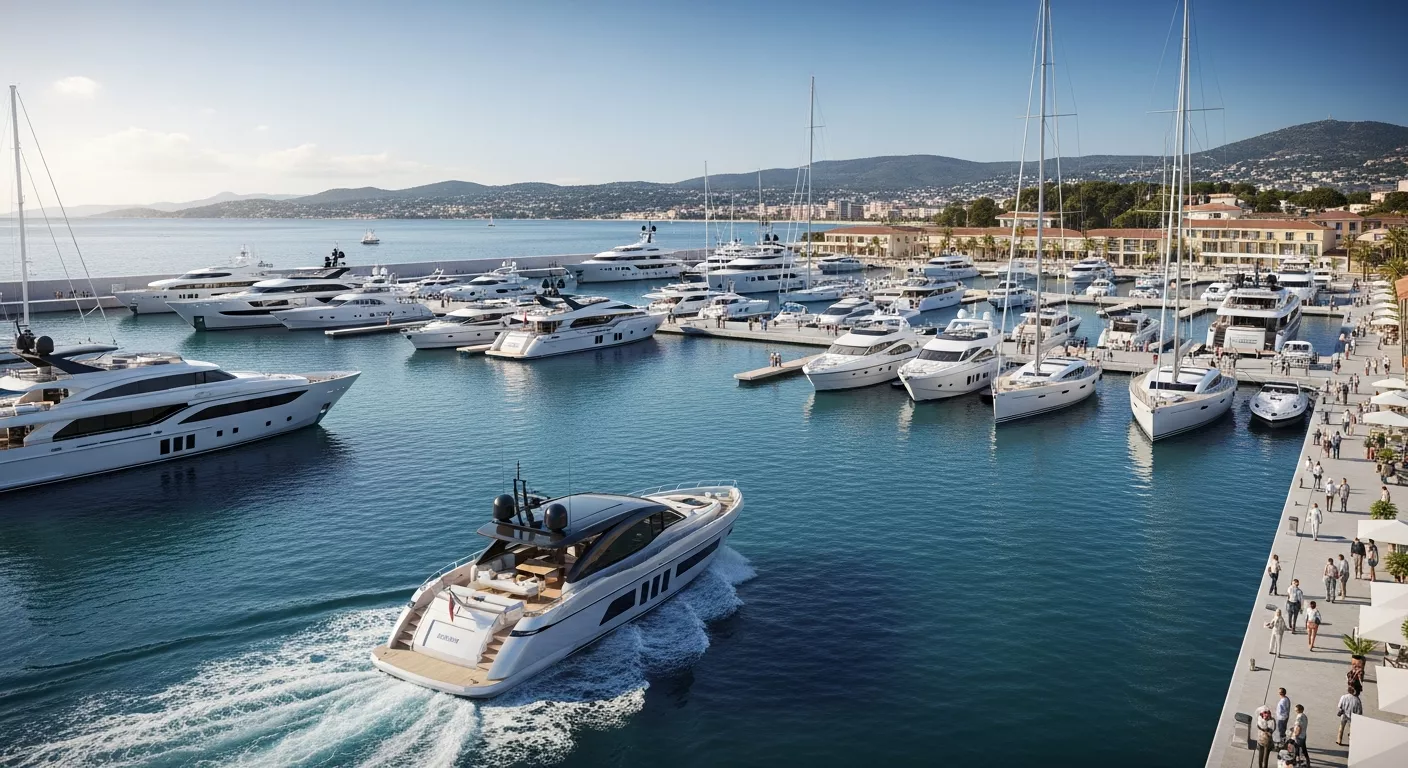
During the summer months, the megayacht fleet congregates in the Mediterranean, visiting hotspots like Monaco, the Amalfi Coast, Ibiza, and the French Riviera. In the winter, many cross the Atlantic to cruise the Caribbean, specifically around St. Barts, Antigua, and the Bahamas. Increasingly, capable explorer yachts are venturing to remote destinations like Antarctica and the South Pacific.
9. How long does it take to build a megayacht?
Building a custom megayacht is a multi-year project. From the initial design phase to the final sea trials, the process typically takes three to five years. Extremely complex builds or those facing supply chain delays can take even longer. Shipyards occasionally offer “semi-custom” platforms that can reduce the build time by utilizing a pre-engineered hull design.
10. Are megayachts environmentally friendly?
Historically, large yachts have a massive carbon footprint due to their high fuel consumption. However, the industry is shifting toward more sustainable practices. Newer vessels incorporate hybrid diesel-electric engines, advanced wastewater treatment plants, and dynamic positioning systems that allow the yacht to stay in place without dropping an anchor, protecting sensitive seabeds and coral reefs.
The Future of Megayacht Design
The maritime industry continues to evolve as owners demand cleaner, more efficient, and more capable vessels. Shipyards are investing heavily in research and development to explore alternative fuels, such as hydrogen fuel cells and advanced synthetic diesels. We are seeing a distinct shift away from traditional white, multi-deck cruisers toward expedition-style vessels. These rugged “explorer yachts” feature reinforced ice-class hulls, extended fuel ranges, and specialized equipment meant for global circumnavigation.
The desire to explore the most remote corners of the ocean, combined with a growing emphasis on environmental stewardship, will shape the next generation of large yachts. As engineering boundaries continue to expand, the world’s largest private ships will undoubtedly remain fascinating feats of human ingenuity.
